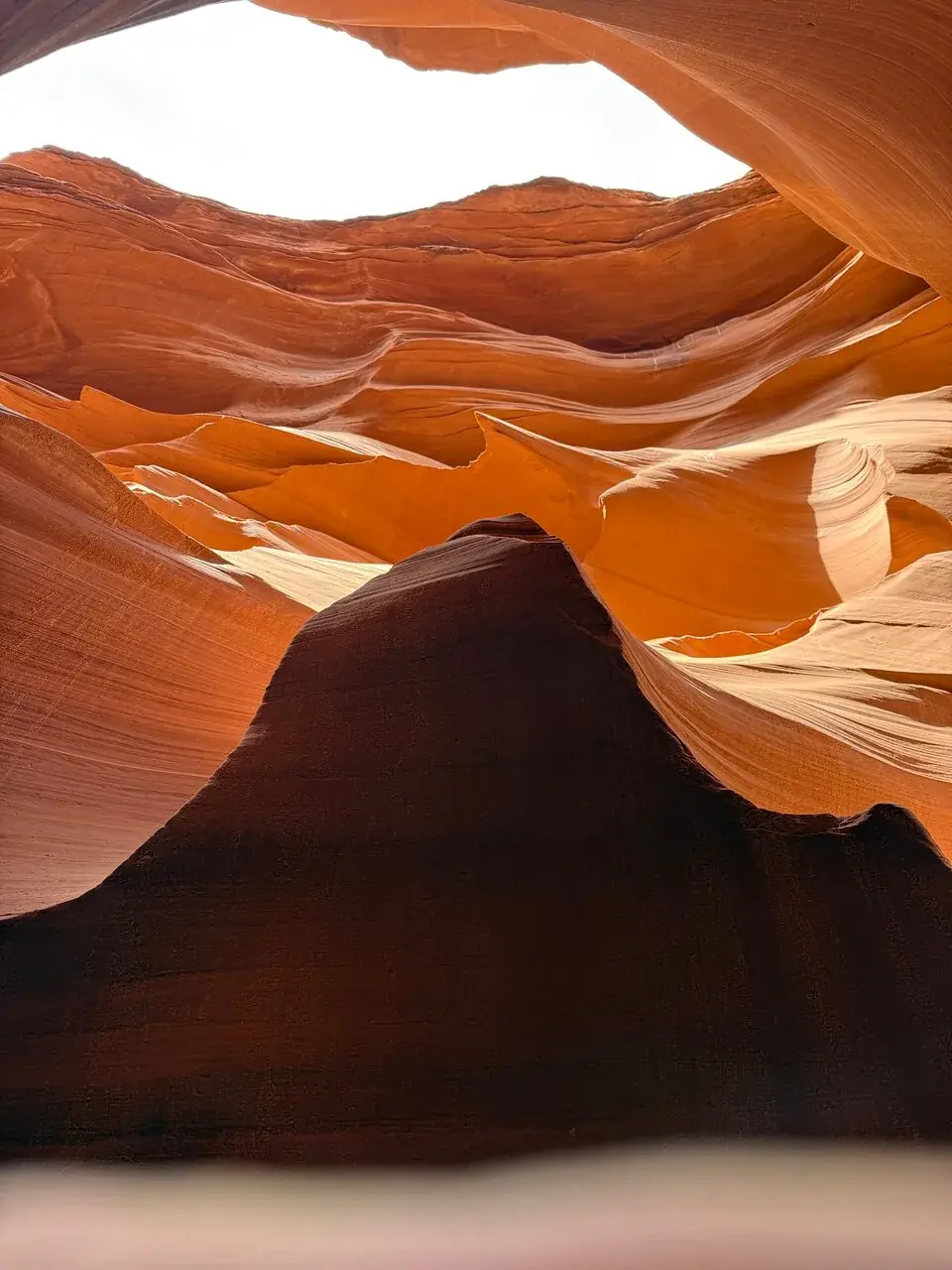
Antelope Canyon is one of the most popular day trips from Las Vegas — and one of the longest. The canyon sits roughly 270 to 280 miles from the Strip, a drive of about four and a half to five hours each way through some genuinely remote desert.
That's nine to ten hours of driving for a tour that lasts ninety minutes. It's absolutely doable, and thousands of people do it every week, but it demands a realistic plan. This guide covers the drive, the day-trip tour options, whether to self-drive or book a bus, and the one detail that catches Vegas travelers out more than any other.
The Distance & Drive Time
Las Vegas to Page, Arizona: roughly 270–280 miles, about 4.5–5 hours each way. The standard route runs north on I-15 through the northwest corner of Arizona and into Utah, past St. George, then east and south on US-89 toward Page. It's a scenic drive — you'll clip the edge of some spectacular country — but it's also long, empty, and largely without services for extended stretches.
Add the canyon tour itself (about 90 minutes), plus a stop at Horseshoe Bend, plus meals and fuel, and a round-trip day from Las Vegas realistically runs 12 to 15 hours. Most organized tours depart between 5 and 7 a.m. and return well after dark.
The Time Zone Trap
This is the single most important practical detail for anyone traveling from Las Vegas, and it catches people out constantly. Nevada observes daylight saving time. Arizona does not. In summer (when daylight saving is in effect), Las Vegas and Page are effectively on the same clock time. In winter, Page is one hour ahead of Las Vegas.
There's a further complication: while Arizona as a state skips daylight saving, the Navajo Nation observes it — and Antelope Canyon is on Navajo land, while the tour operators' offices are in Page.
Worth Adding to Your Itinerary
A Vegas day trip usually revolves around the canyon and Horseshoe Bend, but it's worth knowing what else sits nearby if you have more time. Lake Powell and Glen Canyon Dam are minutes from Page, and travelers comparing formats often weigh a standard Antelope Canyon and Horseshoe Bend combo tour against booking each piece separately. Some multi-day loops also add a stop in Sedona on the way back toward Nevada. Browse live options below.
Self-Drive vs Organized Tour
Both work. They suit different travelers.
Driving yourself. Full control over timing, freedom to stop where you like, ability to stay overnight, and generally cheaper for a group sharing a car. You can time Antelope Canyon for a midday beam slot and Horseshoe Bend for late-afternoon light. The downside: you're doing nine-plus hours of driving in one day if you don't stay over, and the return leg happens after dark. A serious caution — these highways carry significant wildlife after nightfall, and night driving here is genuinely hazardous. If you self-drive, you'll book your canyon tour directly with an authorized operator. See our tickets, reservations & permits guide.
Organized day tours. Somebody else drives, the canyon tour is pre-booked and guaranteed, and Horseshoe Bend is usually included. You can sleep on the bus. For solo travelers or anyone without a rental car, it's the obvious choice. The trade-off is a fixed schedule with no flexibility, an extremely early start, and limited time at each stop. Several operators run these routes from Las Vegas, typically in coaches or smaller vans, often bundling Horseshoe Bend and sometimes adding Lake Powell or a Grand Canyon stop.
Which Canyon Do Vegas Tours Actually Visit?
This is the detail most Las Vegas day-trip listings bury, and it matters enormously if you have a specific image in mind. Many tours from Las Vegas do not visit Upper Antelope Canyon. Upper's midday slots — the ones that produce the famous light beams — are the most competitive reservations in Page, and they're difficult for a bus operator to secure reliably for large groups arriving from five hours away.
As a result, many Vegas day trips use Lower Antelope Canyon or Antelope Canyon X instead, where access is easier to guarantee. Both are beautiful. Neither produces Upper's vertical light beams. Before you book, confirm in writing which canyon is included. Our Upper vs Lower comparison explains exactly what you get from each, and our best time to visit guide covers beam timing.
The Overnight Alternative
If your schedule allows even one night, staying in Page transforms the trip. An overnight lets you drive one leg per day instead of both, book a midday beam slot without racing the clock, see Horseshoe Bend at sunset rather than in whatever gap the itinerary leaves, add Lake Powell or Glen Canyon Dam, and avoid driving unlit desert highways at night.
Many travelers also fold Page into a larger loop taking in Zion, Bryce, the Grand Canyon, or Monument Valley rather than treating it as an out-and-back from Vegas.
Combining With the Grand Canyon
Plenty of visitors want both Antelope Canyon and the Grand Canyon on one trip from Las Vegas. It's possible, but be realistic: attempting both in a single day from Vegas makes for a punishing 18-plus-hour outing with very little time at either site. A far better approach is a two- or three-day loop — Las Vegas to the Grand Canyon, on to Page for Antelope Canyon and Horseshoe Bend, then back.
Practical Tips for the Day
- Book your canyon tour well ahead, especially any midday beam-season slot. These sell out weeks to months out.
- Confirm the time zone on your booking.
- Start early. Organized tours leave between 5 and 7 a.m. for good reason.
- Fuel up before the empty stretches — services are sparse between St. George and Page.
- Bring water and snacks, plus sun protection for Horseshoe Bend's shadeless trail.
- Pack light for the canyon: bags, tripods, and food aren't permitted inside.
- Plan for a late return — most day trips get back to Las Vegas well after dark.