Lower Antelope Canyon is the more adventurous half of Antelope Canyon: narrower, longer, and entered by climbing down into the earth rather than walking in at ground level. It is also typically the better value of the two main canyons, with softer light, more shape variety, and slightly fewer people than Upper.
The short version: two authorized Navajo operators run Lower Antelope Canyon, the entry involves stairs and metal ladders, standard tours last around an hour, and advance booking is still the right move most of the year.
What Makes Lower Antelope Canyon Different
Lower and Upper are close together geographically, but they feel completely different once you are inside. Lower is tighter underfoot, entered from above, and shaped by a longer twisting corridor that gives photographers and repeat visitors more compositional variety.
That shape changes the practical experience too. More light filters in through the wider top opening, so Lower trades Upper's vertical beams for softer, more even illumination. The trade-off is the descent: stairs, ladders, and a more enclosed walk that is not ideal for everyone.
If you want the full side-by-side, our Upper vs Lower Antelope Canyon comparison breaks the decision down in detail.
Worth Adding to Your Day in Page
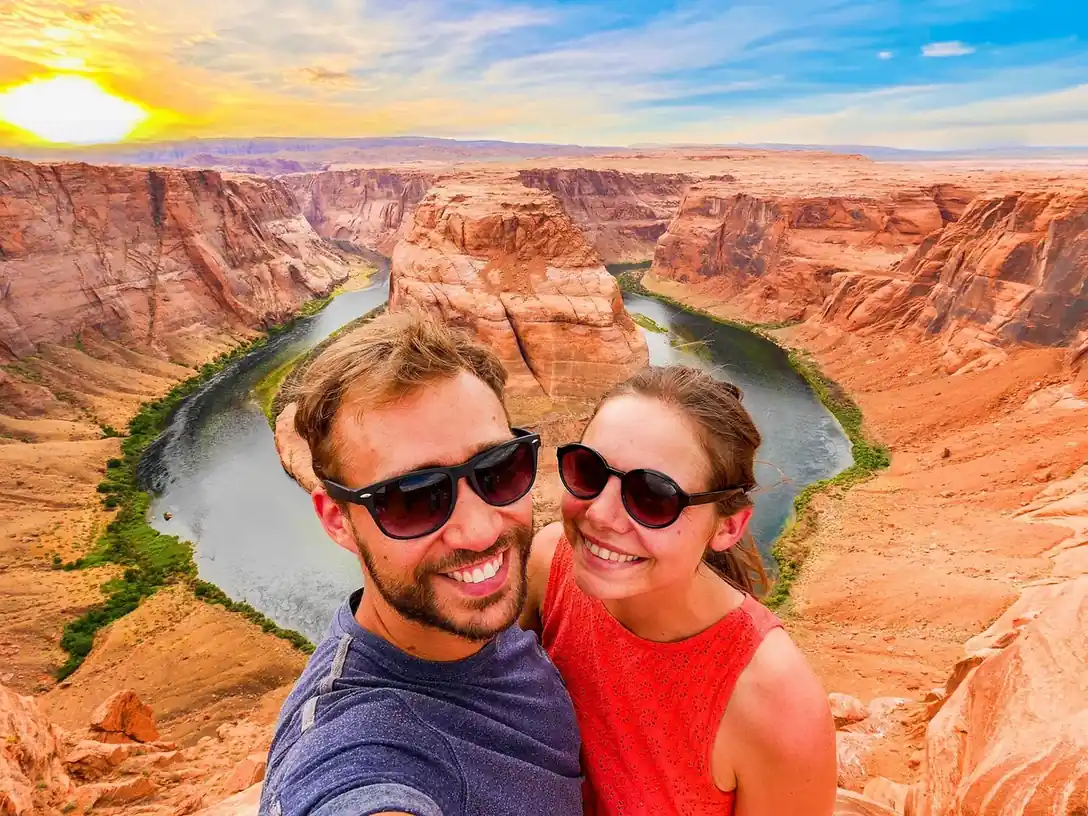
Most visitors pair Lower Antelope Canyon with Horseshoe Bend, add a second slot-canyon stop in Upper Antelope Canyon, or round out the day with a photo boat on Lake Powell. Travelers arriving from Las Vegas or Sedona often book bundled day trips that include Lower plus Horseshoe Bend in one itinerary. Browse live options below.
The Two Authorized Operators
Only two companies are authorized to run tours in Lower Antelope Canyon: Ken's Tours and Dixie Ellis' Lower Antelope Canyon Tours. They operate side by side at the same entrance and the core product is very similar at both: a guided walk through the canyon with tribal permit handling and the required safety procedures built in.
In practice, your decision usually comes down to which departure time is available on your date and which tour format best suits your group. The strongest match in the current project data is the Lower Antelope Canyon Hiking Tour, which is run by Dixie's and has the deepest review base by a wide margin.
What the Descent Actually Involves
This is the part people worry about most, and the right summary is: manageable for most reasonably fit visitors, but it is a real climb. Entry means descending several flights of stairs and a series of fixed metal ladders with handrails before you settle into the canyon floor.
Once you are down, the route is a one-way flow through a little over a mile of twisting corridor. Guides pace the groups through the narrowest sections, talk people through the ladder points, and help with photos along the way.
Good fit: visitors comfortable with stairs, modest climbing, and enclosed spaces. Poor fit: anyone with significant mobility limitations, balance issues, strong claustrophobia, or a serious dislike of ladders. In those cases, Upper is usually the better choice.
How Long It Takes
Most standard Lower Antelope Canyon tours run about one to one and a half hours. Because the entrance is at the operators' lots, you do not spend time on a long off-road shuttle the way you often do at Upper.
Plan to arrive early for check-in, especially in peak season. A 30- to 45-minute buffer is sensible, and it matters even more when you are driving in from outside Page and crossing time-zone boundaries.
What It Costs
Lower Antelope Canyon is generally cheaper than Upper, which is one reason budget-conscious visitors often start here. But it still follows the same basic cost structure: the tour price itself plus the Navajo Nation permit fee, which may be bundled or broken out separately depending on the operator.
As elsewhere in Antelope Canyon, National Park passes do not apply. This is Navajo Nation land, not a federal park site. For the broader pricing and reservation mechanics, see our tickets, reservations & permits guide.
When to Visit Lower
Lower does not depend on the famous Upper light beams, so there is less pressure to lock in one precise midday slot. Midday still brings the richest color and the busiest flow. Morning and late afternoon are usually quieter and often produce softer light that many photographers prefer.
Peak season runs roughly March through November. Monsoon season, usually July through September, adds real flash-flood risk. If operators cancel for safety, that is a serious weather call rather than a nuisance, and reschedule or refund policies usually follow from there.
Booking Advice
Book in advance whenever your dates are fixed, especially for spring, summer, and major holiday windows. Lower can be easier to secure than Upper, but that does not mean same-day availability is reliable.
Also watch the time-zone issue closely. Page follows Arizona Mountain Standard Time year-round, but the Navajo Nation observes daylight saving time. If you are arriving from Las Vegas, Sedona, or the Grand Canyon area, double-check the booking time against local clocks before you leave your hotel.
Photography in Lower
Lower is favored by many repeat visitors because the lighting is more even and the rock forms are more varied. You give up the iconic vertical shafts, but you gain tighter sculptural passages and fewer blown highlights.
Photography remains handheld only on standard tours. Tripods, monopods, and selfie sticks are not permitted. For current tripod-friendly alternatives and photography-specific planning, see our photography tours guide.
Pair Lower With Horseshoe Bend or Upper
Lower works especially well as either the adventure half of a two-canyon day or as the canyon portion of a Horseshoe Bend visit. Many visitors book Lower in the morning or late afternoon, then keep midday free for Upper if they want the beams.