
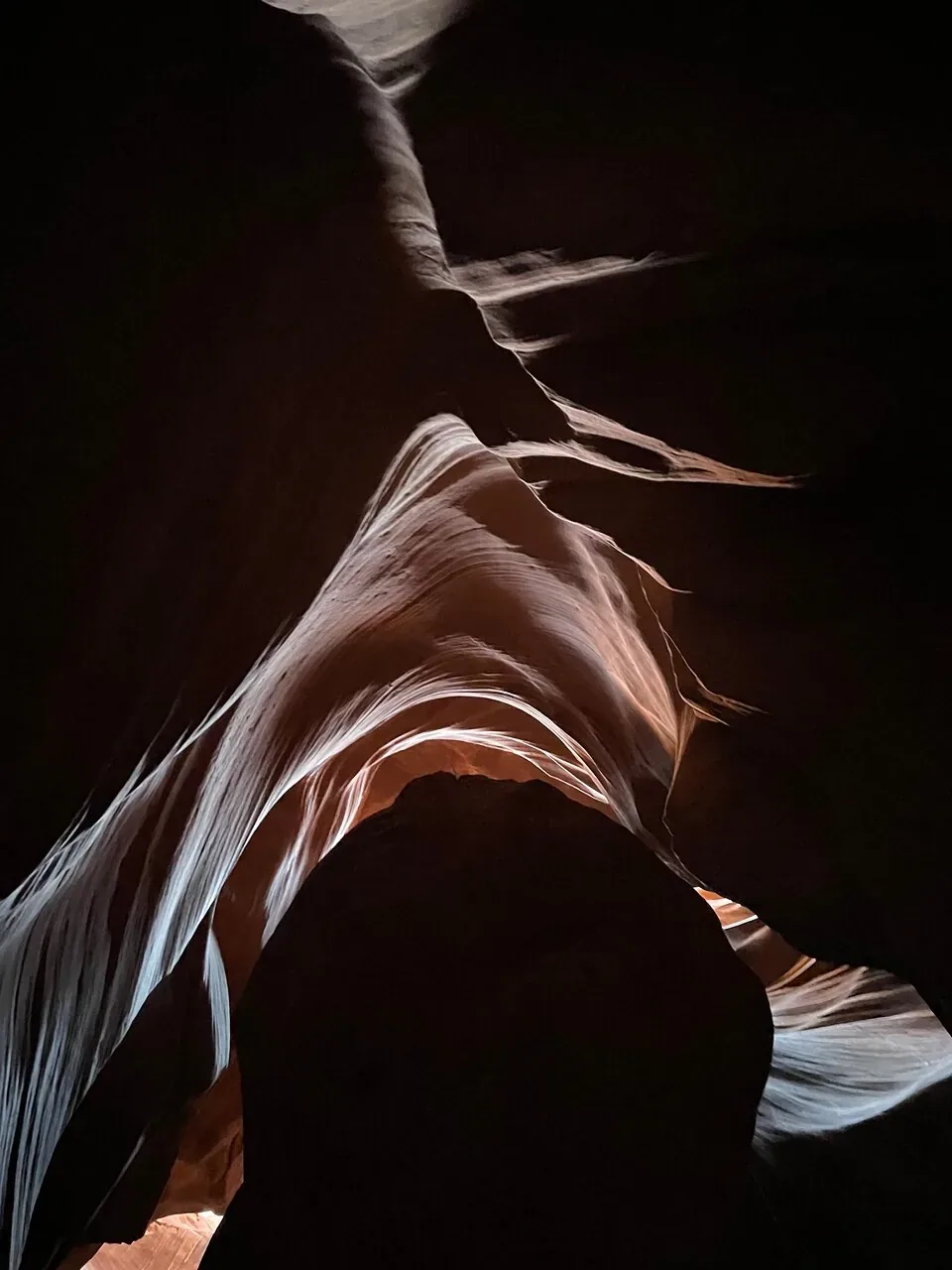
The photos that made Upper Antelope Canyon famous — those blade-sharp shafts of sunlight cutting down through the sandstone — don't happen by accident, and they don't happen year-round. Timing your visit is the single biggest factor in what you'll actually see. Get it right and you'll stand under the beams; get it wrong and you'll walk a beautiful glowing corridor without them.
This guide breaks down exactly when the beams appear, the best time of day and year to go, how crowds and weather shift by month, and how to plan a visit around all of it.
The short version: for the light beams, go between late March and early October, on a clear day, on a midday tour (roughly 10:30 a.m.–1:30 p.m.). Everything below is the detail behind that.
What Creates the Light Beams
Upper Antelope Canyon is a narrow slot with a jagged opening far overhead. When the sun climbs high enough in the sky, its rays drop straight down through that opening and hit the canyon floor as distinct beams — intensified by the fine sand and dust that guides sometimes toss into the air to make the shafts glow.
Three conditions all have to line up:
- The sun must be high enough in the sky, which only happens in the higher-sun months.
- It must be near midday, when the sun passes closest to directly overhead.
- The sky must be clear. Clouds break the beams; overcast days can erase them entirely.
Miss any one of those and the beams weaken or disappear — which is why "when" matters so much more here than at most attractions.
Worth Adding to Your Itinerary
Once your midday slot is booked, most travelers build the rest of the day around the overlook at Horseshoe Bend, a small-group photo boat on Lake Powell, or the ladder descent through Lower Antelope Canyon — a good option for the hours before or after your beam window. If you're arriving from farther out, full-day tours from Las Vegas or Sedona bundle several of these stops into one reservation. Browse live availability for these below.
The Best Season for Light Beams
Beam season runs roughly late March through early October. Within that window, peak beam months are around June and July, when the sun is at its highest and the shafts are most dramatic and vertical. Shoulder beam months (late March–May and September–early October) still produce beams, though they're less intense and appear for a shorter window each day. Outside beam season (roughly November–February) the sun sits too low to send beams to the floor — you can still visit, and the walls glow with warm reflected light, but not the iconic vertical shafts.
The Best Time of Day
On a beam-season day, the beams appear in a midday window of roughly 10:30 a.m. to 1:30 p.m., strongest right around noon. Midday tours are the premium product — operators price these slots highest and they sell out first. Early-morning and late-afternoon tours are cheaper and less crowded, but you won't see beams — you'll see the softer ambient glow instead.
If beams are your priority, book a midday departure and accept the higher price and larger crowds as the trade-off. If you care more about a calmer walk and the sculpted color of the walls, an off-peak time of day can actually be more pleasant. Either way, reserve early — see our tickets and reservations guide for how far ahead to book.
Month-by-Month: What to Expect
| Period | Light beams | Crowds & conditions |
|---|---|---|
| March – May | Begin late March, strengthening through spring | Comfortable temperatures, building crowds — a good balance, especially April–May |
| June – July (peak) | Strongest beams of the year | Biggest crowds of the year; hot outside, cooler inside the canyon. Midday slots sell out well ahead |
| August – September | Still appear, but monsoon overlap | Flash-flood closures possible; September eases into pleasant temperatures with slightly thinner crowds |
| October | Fade as the month goes on | Early October can still deliver; late October generally won't. Crowds thin, temperatures pleasant |
| November – February | No true beams | Fewest visitors of the year, shorter operating hours, possible holiday closures — confirm dates |
Crowds: When It's Busiest and Quietest
Upper Antelope Canyon is popular, and the corridor is narrow, so crowds shape the experience as much as the light. The busiest times are midday slots from late spring through early fall — the exact overlap of peak beams and peak travel season. The quietest times are weekday mornings in the off-season (roughly December–January), when visitor numbers drop sharply.
There's an inherent tension here: the conditions that produce the best beams also draw the biggest crowds. If you want the beams, plan for company. If you want solitude, trade the beams for an off-peak visit — or consider Lower Antelope Canyon, compared in our Upper vs Lower guide.
Monsoon Season & Flash Flood Safety
From roughly July through September, the region sees monsoon storms — and slot canyons are the most dangerous place to be during one. Rain falling miles away can funnel into the canyon as a sudden, powerful flood, even when the sky above you looks clear. Tours close when there's flood risk — operators monitor weather closely and will cancel departures for safety, and this isn't negotiable. If you're visiting in monsoon months, build in flexibility and understand your operator's weather-cancellation policy (typically a refund or reschedule).
How to Time the Perfect Visit
Putting it all together, the ideal beam-hunting plan looks like this:
- Choose a beam-season month — June–July for the strongest beams, or April–May / September for a slightly quieter compromise.
- Book a midday slot (around 10:30 a.m.–1:30 p.m.), as far ahead as you can.
- Hope for clear skies — beams need sun, so a bright forecast matters.
- Mind the time zone. Page runs on Arizona Mountain Standard Time year-round (no daylight saving), but the Navajo Nation observes it. Confirm which time your booking uses so you don't miss your slot.
- Have a weather backup if you're visiting during monsoon season.