Antelope Canyon is one of the most photographed places on the planet, and one of the most misunderstood to plan a trip to. It's not a national park. There's no gate you drive up to, no trailhead you park at, and no way to wander in on your own. Almost every question first-time visitors have traces back to that one fact.
This guide covers the essentials: where the canyon actually is, why a tour is mandatory, how to get there, which section to choose, and what the whole thing costs.
The short version: Antelope Canyon is on Navajo Nation land near Page, Arizona, and every visit must be on a guided tour with an authorized Navajo operator. Book in advance — you cannot visit independently.
Do You Need a Tour? Yes — Always
There is no self-guided option at Antelope Canyon. Not for Upper, not for Lower, not for any of the lesser-known sections. Tribal law requires that every visitor be accompanied by an authorized Navajo guide, and there is no permit, pass, or workaround that changes this. If a website offers "self-guided Antelope Canyon access" or "skip-the-tour tickets," it is not legitimate.
Safety. Slot canyons are among the most dangerous terrain in the Southwest during a flash flood. Rain falling miles away — often under a sky that looks perfectly clear where you're standing — can funnel into a narrow canyon and fill it within minutes. A catastrophic flood in Lower Antelope Canyon in August 1997 killed eleven hikers, and the storm that caused it was roughly fifteen miles away. Guided access means someone is watching the weather who knows what to watch for.
Stewardship. The canyon sits on Navajo Nation land and remains culturally significant to the Diné people. Guided-only access lets the Nation manage visitor numbers, protect fragile sandstone from wear, and ensure that tourism to the canyon benefits the community that has always lived alongside it.
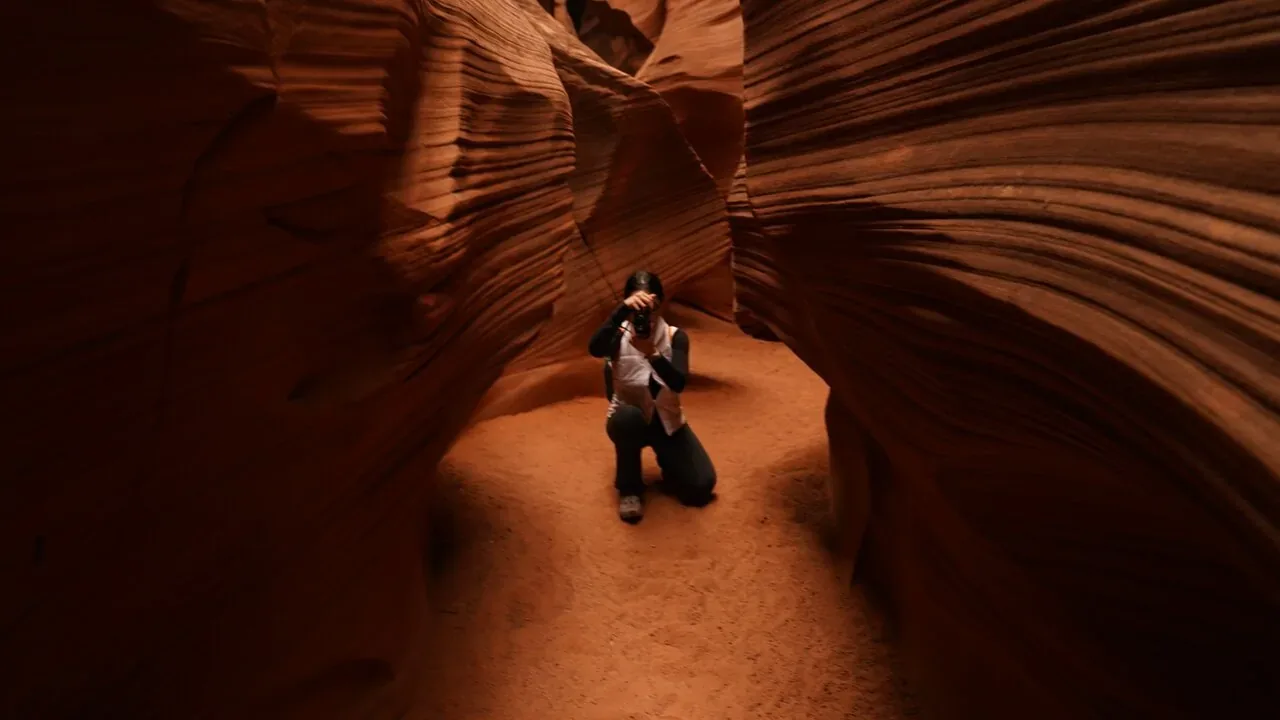
The practical upside for you: a good guide genuinely improves the visit. They know where each light beam lands and when, which angles produce the best photographs, and how to get a usable image out of a smartphone in low light.
Worth Adding to Your Itinerary
Most first-time visitors build the rest of the day around the overlook at Horseshoe Bend, a small-group photo boat on Lake Powell, or a walk through the ladders of Lower Antelope Canyon. If you're arriving from farther out, full-day trips from Las Vegas and Sedona bundle several of these stops together. Browse live availability for these below.
Where Antelope Canyon Actually Is
Antelope Canyon lies just outside Page, Arizona, in the far north of the state near the Utah border, within Navajo Nation land. The canyon entrances are around ten minutes from town along Highway 98.
Page itself is the practical base for a visit — it's where the tour operators' offices are, where you'll sleep, and where the other major attractions in the area cluster. Nearby you'll find Horseshoe Bend, Lake Powell, and Glen Canyon Dam, all within a short drive. Our visitor essentials section covers the area in detail.
One important distinction: because this is Navajo Nation land rather than a national park, America the Beautiful and other federal park passes are not accepted. A separate Navajo Nation permit fee applies instead.
Which Section Should You Visit?
"Antelope Canyon" isn't a single place. Several distinct slot canyons carry the name, each with its own operators, entrance, and character.
Upper Antelope Canyon is the famous one. You walk in at ground level on flat sand, and its shape funnels sunlight into the dramatic vertical light beams that made the canyon iconic. It's the easiest to enter, the busiest, and the most expensive. See our Upper Antelope Canyon tours guide.
Lower Antelope Canyon sits about fifteen minutes away and is entered by descending stairs and metal ladders. It's narrower, longer, generally cheaper, and a bit less crowded, with softer diffused light rather than beams. See our Lower Antelope Canyon entry tours.
Antelope Canyon X and the lesser-known canyons — including Owl, Rattlesnake, and Mountain Sheep — are quieter and more affordable alternatives run by separate operators. They're a strong choice if you want space to breathe, and some still permit tripods for photography; more on that in our photography tours guide.
If you're torn between the two main options, our Upper vs Lower comparison walks through the decision properly. Many visitors do both in a single day.
How to Get to Page, Arizona
Most visitors drive. Page is remote, and the journey is part of the trip.
| From | Approximate drive time |
|---|---|
| Flagstaff, AZ | ~2 hours — the shortest hop from a major town |
| Sedona, AZ | ~2.5–3 hours, a scenic run through Oak Creek Canyon |
| Las Vegas, NV | ~4.5–5 hours (270–280 miles) — popular as a long day trip, though an overnight is more comfortable |
| Phoenix, AZ | ~4.5–5 hours via Flagstaff |
| Grand Canyon South Rim | ~2.5–3 hours — why the two pair so naturally on a road trip |
By air, Page Municipal Airport (PGA) sits about three miles from town but serves only limited regional flights — most travelers fly into Las Vegas or Phoenix and drive. A word of caution: these are long, open desert highways, and wildlife on the road after dark is a genuine hazard, so plan to arrive before nightfall where you can. For full-day options that handle the drive for you, see our day trips from Las Vegas and day trips from Sedona.
What It Costs
Budget for two separate charges: the tour price, which varies by canyon, operator, and time slot (Upper Antelope Canyon is the most expensive, with midday light-beam slots carrying the highest premium; Lower is generally cheaper, and Canyon X cheaper still), and the Navajo Nation permit fee, charged per person, per location, per day. Some operators bundle this into the ticket price and some list it separately, so always check whether the figure you're quoted is all-inclusive.
When to Go
If you want the light beams, timing is everything. They appear only in beam season — roughly late March through early October — during a midday window of about 10:30 a.m. to 1:30 p.m., and only on clear days. Book a midday slot in that window and hope for sun. Outside beam season the canyon is still beautiful, with warm glowing walls and far fewer people, but you won't see the vertical shafts. Note too that July through September brings monsoon storms, when tours may close for flash flood risk. Full month-by-month detail is in our best time to visit guide.
Booking and Planning Essentials
Book well in advance. Midday beam-season slots sell out weeks to months ahead. Reserve directly with an authorized operator where possible — it usually costs less than third-party resellers and supports Navajo-owned businesses.
Arrive early. Plan to check in around 30 minutes before departure. Tours run on tight schedules and latecomers generally can't be accommodated.
Mind the time zone. Page runs on Arizona Mountain Standard Time year-round because Arizona doesn't observe daylight saving — but the Navajo Nation does. This causes real confusion in spring and summer, so confirm which time your booking uses.
Pack light. Bring water, sunscreen, a hat, closed-toe shoes, your phone or handheld camera, and a little cash for a guide gratuity. Leave behind tripods, monopods, selfie sticks, bags and backpacks, food, and umbrellas — these aren't permitted inside.
A Simple First-Timer's Plan
- Choose your canyon — Upper for light beams and easy walking, Lower for adventure and a lower price.
- Pick your date and time — midday in beam season if the beams matter.
- Book directly with an authorized operator, well ahead.
- Base yourself in Page, ideally overnight.
- Add Horseshoe Bend, and Lake Powell or Glen Canyon Dam if you have time.
- Arrive 30 minutes early, travel light, and let your guide do the rest.